
Five questions sort real AI speakers from slide-deck tourists: can you watch twenty minutes of them unedited, is their material dated this year, can they explain how they’d adjust for your exact room, can they demonstrate AI live rather than describe it and do they have a point of view or just information. If a speaker passes all five, your event is safe. If they dodge two, keep looking.
Full disclosure before we go further: yes, I’m a professional speaker writing a buyer’s guide for booking speakers. So use every test in this article on me. That’s what it’s for, and frankly it’s what you should do to anyone whose website tells you how good they are.
Because I know what’s actually at stake for you. It’s not the fee. It’s standing in front of your members, your community or your board after the speaker either bored them stiff or scared them witless. You don’t get that afternoon back, and in a member organisation you wear it for a year. This article is the vetting kit.
The five questions
- Can you watch twenty minutes, unedited? Sizzle reels are editing, not speaking. Ask for a full-length recording of a real session. Twenty minutes tells you how they hold a room between the highlights, which is where your event actually lives.
- Is their material dated this year? AI moves fast enough that a speaker whose most recent public content is from 2024 is presenting history. Check their last article, last video, last post. The date is the tell.
- How do they adjust for your room? Ask directly: how would this change for our audience? A real answer names your sector, your members’ starting point and what they’d cut. A vague answer means you’re getting the same talk the mining conference got last month.
- Can they demonstrate AI live? In 2026, an AI speaker who only shows slides about AI is describing the surf from the carpark. Live demonstration carries risk, and how a speaker handles that risk on stage tells your audience more about working with AI than any slide can.
- Do they have a point of view? Information is free now; your members can ask a chatbot. What a speaker owes the room is a position: what to do, what to skip and why. If you can’t say in one sentence what a speaker stands for, neither will your audience.
How do you spot a hype merchant in one phone call?
Listen for the direction of the questions. A practitioner asks about your room before they pitch anything: who’s in it, what they do, where they sit with AI today, what’s worrying them. A hype merchant opens with their keynote titles and their fee, and asks about your audience last, if at all.
The best speakers I know invest five to ten hours understanding an organisation before they build a session. That preparation is invisible on the day, which is exactly why it works. If the first call is all transmission and no reception, the keynote will be too.
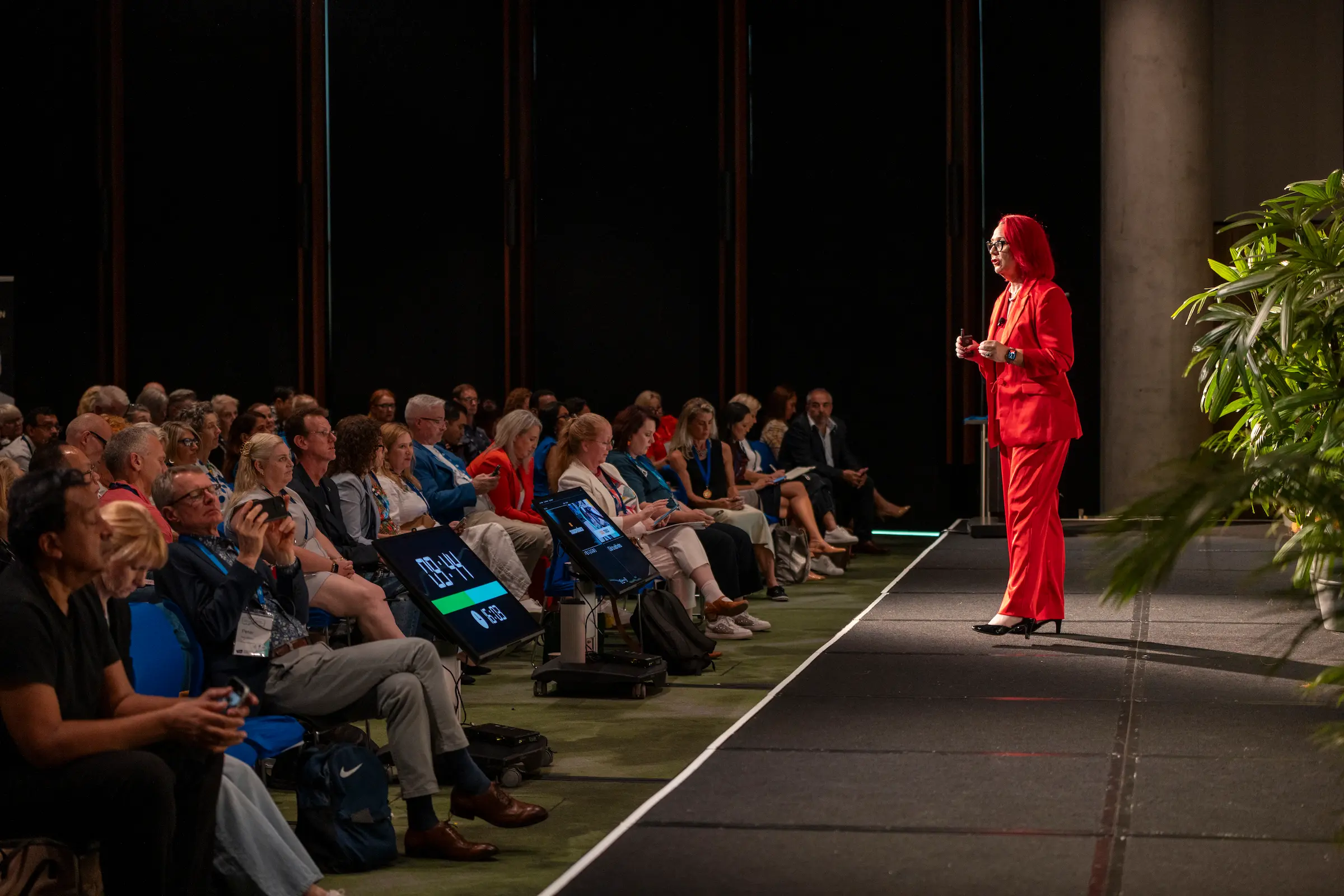
Why the room matters more than the showreel
The same AI talk cannot serve a board of directors and a hall full of trades businesses, and anyone who says theirs does is telling you something. The room’s starting point decides everything: the examples, the pace, the depth and especially how the fear gets handled. Because in every AI session, someone in that room is quietly frightened for their job, and how a speaker treats that person is the difference between a room that leans in and a room that shuts down. Ask your candidate how they handle it. The good ones have a real answer; the rest make a joke.
Regional and member events deserve a specific word here. A room in Springfield or Roma isn’t a smaller version of a Sydney conference; it’s a different room, with its own businesses, its own pace and its own bull-detector, which is finely tuned. When the Greater Springfield Chamber brought their members through an AI program, the sessions worked because they were built from the members’ actual businesses, from boardroom to frontline. That’s the standard to hold every speaker to, me included.
What does a good pre-event brief look like?
One page from you buys customisation you’d otherwise pay for in disappointment. Send: who’s in the room and what they do, where they sit with AI today (curious, anxious, already experimenting), the three things you want people saying on the way out, anything that’s off-limits and the organisational context a stranger wouldn’t know. A speaker worth booking will ask for most of this anyway. If they don’t ask for any of it, see the phone-call section above.
What do the credentials actually mean?
Speaker credentials are a floor, not a ceiling, but the floor is worth checking. The one with teeth in Australia is the CSP, the Certified Speaking Professional, held by 12% of professional speakers worldwide. It isn’t a weekend certificate; it’s audited evidence of sustained paid work, client results and platform skill over years, assessed by peers. Awards, board roles and media track records are verifiable signals too: they tell you other people with something to lose have already vetted this person.
Then watch the twenty minutes anyway. Credentials tell you someone could hold your room. The recording tells you whether they will. And third-party proof beats self-description every time, which is why a speaker’s media appearances and books are worth ten paragraphs of their own bio.
The red flags
- They pitch before asking a single question about your audience.
- Their most recent full-length video is more than twelve months old.
- They propose the same talk regardless of who’s in the room.
- They can’t explain how they handle the person scared for their job.
- Nothing exists after the event: no resources, no follow-up, no way for your members to keep the momentum.
What to do on Monday morning (event organiser edition)
- Shortlist three names and ask each for a full-length recording. Watching an hour of video is the cheapest insurance your event budget will ever buy.
- Write the one-page brief before you sign anything. It doubles as your own clarity about what the event is for.
- Ask each candidate the fear question and the adjustment question on the first call, and book the one whose answers name your room.
And if you’d like to run all five questions on me, everything you need is on my speaking page, full-length footage included.
Run all five questions on me.
Everything you need is on my speaking page, full-length footage included. Ask the fear question and the adjustment question, and book the speaker whose answers name your room.
Make a speaking enquiry →Questions people ask
What does an AI keynote speaker cost in Australia?
As at 2026: emerging speakers sit around $3,000 to $7,000, established professionals $7,000 to $15,000 and premium speakers with media profiles and bestselling books $15,000 to $30,000 or more. International celebrity names are another planet entirely. Budget a further 15 to 25% for travel and technical, and treat any quote given before questions about your audience with suspicion.
Keynote or workshop for a member event?
Keynote to open minds, workshop to change Mondays. If your members are new to AI, a keynote builds the appetite. If they're already curious, a hands-on workshop sends them home with something working. The strongest member events run both: keynote in the morning, workshop after lunch, same speaker so the thread holds.
How far ahead should we book an AI speaker?
Three to six months for most professionals, six to nine for the high-demand names and longer if your date sits in conference season. The good ones are booked because they're good; the instantly available ones deserve one extra reference check.
What should we send the speaker before the event?
The one-page brief: who's in the room, their AI starting point, the three outcomes you want, anything off-limits and the context a stranger wouldn't know. Add last year's feedback if you have it. Ten minutes of your writing buys hours of their preparation aimed at your exact room.
Human-led. AI-leveraged. My philosophy, my business, this article. The Augmented Workforce in action.
Drafted with Ada, my AI collaborator. Reviewed, shaped and signed off by me. How I work with AI· Tracy Sheen CSP