
On 5 March 2026 the Federal Court handed down judgment in ASIC v Bekier. Seven former non-executive directors of Star Entertainment walked away. Two senior executives did not.
Most of the coverage focused on the split, and fairly. But there is a passage in Justice Lee’s judgment that almost nobody outside the profession has read, and it is the reason this article exists.
His Honour used the case to say something about directors using AI.
What the Court actually said about AI
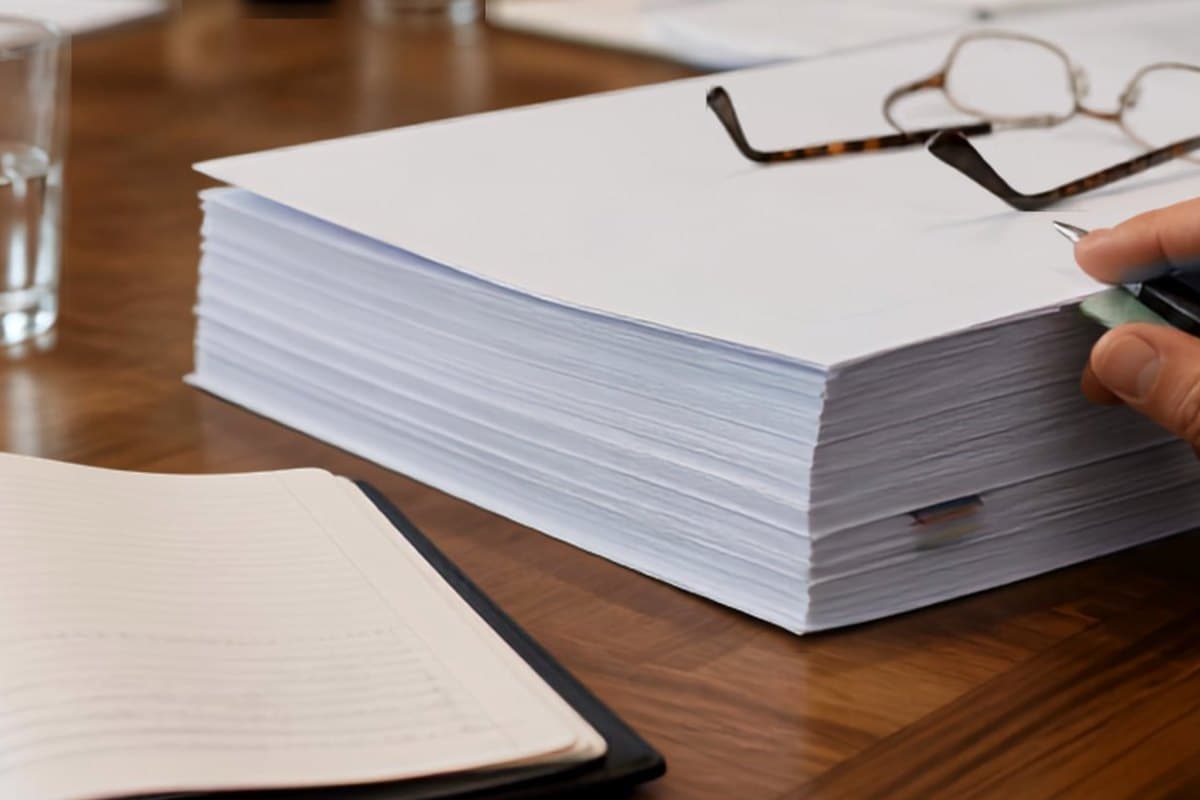
The context matters. As the AICD records it, Justice Lee observed that the board pack of a public company has grown from a modest bundle of papers designed to assist judgment into something closer to an electronic publishing project, and that it can become oppressive.
Anyone who has served on a board recognises that description immediately. Four hundred pages, distributed on a Thursday, for a meeting on Monday.
His Honour was equally direct about what directors then do: read what appears central, scan what seems material, and assume anything truly alarming would have been highlighted.
So directors reach for something to summarise it. The Court did not pretend otherwise, accepting that it would be inaccurate to deny that many individual directors are already using AI informally to prepare for meetings.
What the judgment offers is a boundary rather than a prohibition. Boards may address information overload through the principled and transparent use of technology, but it must not displace independent judgement and individual diligence. Analysing and understanding the information management provides remains a core function of a board.
Two propositions, then, and they sit together uncomfortably. AI may assist. It may not substitute.
The Court’s own catchwords put it in fourteen words.
“The use of technology may assist comprehension, but it cannot displace human judgment.”
Catchwords to ASIC v Bekier (Liability Judgment) [2026] FCA 196, Lee J
There is a harder line sitting beside it, and it is the one I would put in front of any chair.
“Directors cannot rely upon an inability to cope with the volume of information they receive.”
Catchwords to ASIC v Bekier (Liability Judgment) [2026] FCA 196, Lee J
The pack being enormous is not a defence. It is the condition you are expected to manage.
A third proposition has been widely attached to the judgment since March: that AI use must be governed by a formal written policy. That is sound advice and I give it myself. It is not what the Court said. The catchwords consider the impact of AI on corporate governance practices and go exactly as far as the sentence above, no further. Worth being precise about, because a director who is told a court imposed a policy requirement will eventually ask to see where.
If a director in your organisation is running board papers through a chatbot right now, is that transparent? Could you evidence that they engaged with the material themselves? For most Australian boards the honest answer to both is no.
The duty did not change. The evidence did.
Section 180(1) of the Corporations Act asks whether a reasonable person in the director’s position, with the same responsibilities and in the company’s actual circumstances, would have exercised the same care and diligence.
Nothing in that sentence mentions technology, and nothing needs to. The duty is old, settled and technology neutral. What AI changes is not the standard but the record against which you are measured.
Bekier is instructive here. The Court could only find what the documents could prove. Minutes, emails, contemporaneous records. What actually happened in those rooms and what could be established in evidence were not the same thing.
Now add AI to that picture. Where a company deploys AI that causes harm, through bias, fabrication, a privacy breach or a decision nobody checked, the question becomes what the board knew or ought reasonably to have known, and what arrangements it had in place to oversee that use. Those are evidentiary questions, answered years later, from documents.
A board that has never written anything down about AI has nothing to point to.
The defence you were counting on
There is a second judicial voice here, and it is the sharper one for anyone who assumes the business judgment rule will absorb the risk.
On 21 May 2026, Chief Justice Andrew Bell AC delivered the Harold Ford Memorial Lectureon corporate responsibility and directors’ duties in the era of artificial intelligence. His view was that it is extremely doubtful a director who blindly adopts an AI-generated recommendation could rely on the business judgment rule in section 180(2).
Sit with that. Section 180(2) protects a judgment made in good faith, for a proper purpose, without material personal interest, on the basis of appropriate information, and in the rational belief that it is in the best interests of the company. Adopting an output you did not engage with fails the informed limb before you reach any of the others. It is difficult to characterise as a judgment at all.
The Chief Justice also made the framing point plainly: AI is not a technical issue to be delegated to senior management. It sits at the board table.
Am I on the hook for what management does?
The short answer from Bekier is reassuring, with a condition attached.
Non-executive directors are generally entitled to rely on management to identify and communicate risks. ASIC could not prove that a reasonable non-executive director, knowing what they knew at the time, would have acted differently. That is why the seven walked.
The condition is red flags. Reliance holds until something in front of you should have prompted a question you did not ask. Justice Lee found against the former CEO precisely because he held information indicating the risks were higher than the board papers suggested, and a reasonable director in his position would have recognised what was missing. The standard is also set by the company’s actual circumstances, so a board overseeing a high-risk operation is measured against that, not against a general average.
Applied to AI, the question becomes uncomfortable. If your organisation is running AI in hiring, credit, pricing or customer decisions, and the board has never asked how it was tested or who checks it, is that reliance, or is it a red flag you walked past?
Two regulators, six weeks
This is not a hypothetical concern being raised by lawyers with time on their hands. Australian regulators moved on it inside a two-month window.
In April 2026, APRA wrote to regulated entities with findings from a targeted engagement with large banks, insurers and superannuation trustees. It warned against treating AI as just another technology and named weaknesses across four areas: cyber and information security, governance, supplier risk, and change management and assurance. Its summary line was blunt. AI adoption is moving fast, governance maturity is lagging. It also set an expectation directed squarely at the board table: directors must hold sufficient understanding and literacy to provide effective challenge on AI risk and strategic direction.
On 8 May 2026, ASIC issued an open letter to licensees and market participants, warning that frontier AI is increasing the capability, speed and accessibility of sophisticated cyber attacks, and that existing controls will be tested more often and under greater pressure. It carried a twelve-point action list and four governance expectations, and asked that the letter be tabled and discussed at board and risk committee level.
None of that created a new obligation. All of it signalled that the existing ones are being actively supervised.
Worth remembering too that ASIC flagged this early. Its 2024 report, Beware the Gap, found AI uptake in financial services was outrunning the governance built to hold it.
The trap in the board pack
Here is the bind, and it deserves naming plainly.
The reason directors reach for AI is that board packs became unreadable. The reason using AI on board packs is risky is that it can substitute for the engagement the duty requires. Both things are true at once.
Banning AI does not fix it. The pack is still four hundred pages, and the director still has a day job. All a ban achieves is pushing the use underground, which is the worst of both worlds: the same reliance, none of the visibility, and no policy to point to when someone asks. It is shadow AI in the one room where it costs the most.
The fix runs in two directions. Fix the pack, which is the chair’s job and always has been. And put a policy around the tool, which is the board’s.
A workable policy is short. What AI may be used for. What it must not be used for, with confidential board material named specifically. Which tools are approved and where the data goes. What gets disclosed, to whom, and when. And an acknowledgement that a summary is a starting point for reading, not a substitute for it.
That is a page. It is not a project, and there is a method for writing it.
What to ask at your next meeting
Five questions. None of them require a technical answer.
- Are any of us using AI on board papers? Ask it openly, and answer it first yourself if you are the chair.
- Do we have a policy covering that use, and could we produce it if asked?
- Where does board material go when it is put into a tool, and who else can see it?
- How would we evidence, two years from now, that we engaged properly with a decision we are about to make?
- Who is accountable for AI across the organisation, by name?
That last one connects this back to where board oversight of AI actually begins.
Where this sits in GIST
The pattern is the same one I take into every boardroom.
Guardrails come first, because a board that has not decided what may go into a tool has already decided by default. Confidential board material is the obvious first line to draw.
Intentmatters because “the pack is too long” is a real problem worth solving, and naming it out loud produces a better answer than pretending nobody is struggling.
Strategy is where the chair fixes the pack, not just the policy.
Practical Training is the one boards skip. Directors are asked to oversee a technology most have never been shown how to use well. Nobody wants to be the person in the room admitting that, which is exactly why the training has to be offered rather than assumed.
Accountability then runs across the five levels of the HUMAN map, from the individual director’s own habits through to the community your organisation sits in.
The short version
Directors’ duties did not change when AI arrived. The context did, and the evidence trail did with it.
A Federal Court judgment now says AI may assist a director and may not replace the director’s own engagement. A Chief Justice has said the business judgment rule is extremely doubtful cover for someone who simply adopted what the machine produced. Two regulators have said, in writing, that they are watching. And most Australian boards currently have no policy, no visibility and nothing on the record.
The exposure was never that a director used AI. It is that nobody decided how.
Human-led. AI-leveraged. In a boardroom, that stops being a philosophy and starts being an evidentiary position.
A board briefing that survives a bad week.
What may go into a tool, what may not, who is accountable and how you would evidence it later. I run this with boards and executive teams as a working session, not a lecture.
Work with me →Questions people ask
Can directors use AI to read board papers?
On the guidance emerging from ASIC v Bekier [2026] FCA 196, Justice Lee accepted that many directors already use AI informally to prepare for meetings, and pointed to the principled and transparent use of technology as a legitimate response to board information overload. The qualification is the important part: it must not displace independent judgement and individual diligence. Analysing and understanding information provided by management remains a core function of a board.
Did ASIC v Bekier create a new duty about AI?
No. The case was decided under section 180(1) of the Corporations Act 2001, the existing duty of care and diligence. The Court found the former CEO and Managing Director and the former Chief Legal and Risk Officer breached that duty, and dismissed ASIC’s case against seven former non-executive directors. The observations on AI were guidance offered alongside the substantive findings.
What does section 180(1) actually require?
That a director or officer exercise their powers and discharge their duties with the care and diligence a reasonable person would exercise if they were in that position, with those responsibilities, in the company’s circumstances. It is assessed on what the person knew at the time, not with hindsight.
Does the business judgment rule protect a director who relied on AI?
Chief Justice Andrew Bell AC addressed this in the 2026 Harold Ford Memorial Lecture on 21 May 2026, saying it is extremely doubtful that a director who blindly adopts an AI-generated recommendation could rely on the business judgment rule defence in section 180(2). The defence requires an informed judgment made in good faith and in the belief it is in the best interests of the company. Adopting an output without engaging with it is difficult to describe as a judgment at all.
Are Australian regulators actually looking at AI governance?
Yes. APRA wrote to regulated entities in April 2026 naming weaknesses across cyber and information security, governance, supplier risk, and change management and assurance, and said boards must hold sufficient understanding and literacy to challenge AI risk. ASIC issued an open letter on 8 May 2026 on cyber resilience in the face of frontier AI, and asked that it be tabled and discussed at board and risk committee level.
Do we need an AI policy for the board itself, separate from the organisation’s policy?
The organisation’s policy rarely contemplates confidential board material, which is the most sensitive category of information a director handles. Whether that becomes a separate document or a named section of the existing one matters less than the fact that somebody has written down what happens to board papers.
Human-led. AI-leveraged. My philosophy, my business, this article. The Augmented Workforce in action.
Drafted with Ada, my AI collaborator. Reviewed, shaped and signed off by me. How I work with AI· Tracy Sheen CSP
This article describes Australian law as at August 2026 and is general information, not legal advice. Directors should obtain advice on their own circumstances.