
Earlier this month I was in Prague for the 73rd World FCEM Congress, with women who own and run businesses from every continent. I came home with the international Digital Entrepreneur Award, which still makes me grin.
The award is the reason I was there. The conversations are the reason I’m writing.
The first thing said to me on stage
The Leading from the Front panel was five women leaders, five countries. Canada. The Czech Republic. Mexico. Myanmar. And me, flying the flag for Australia.
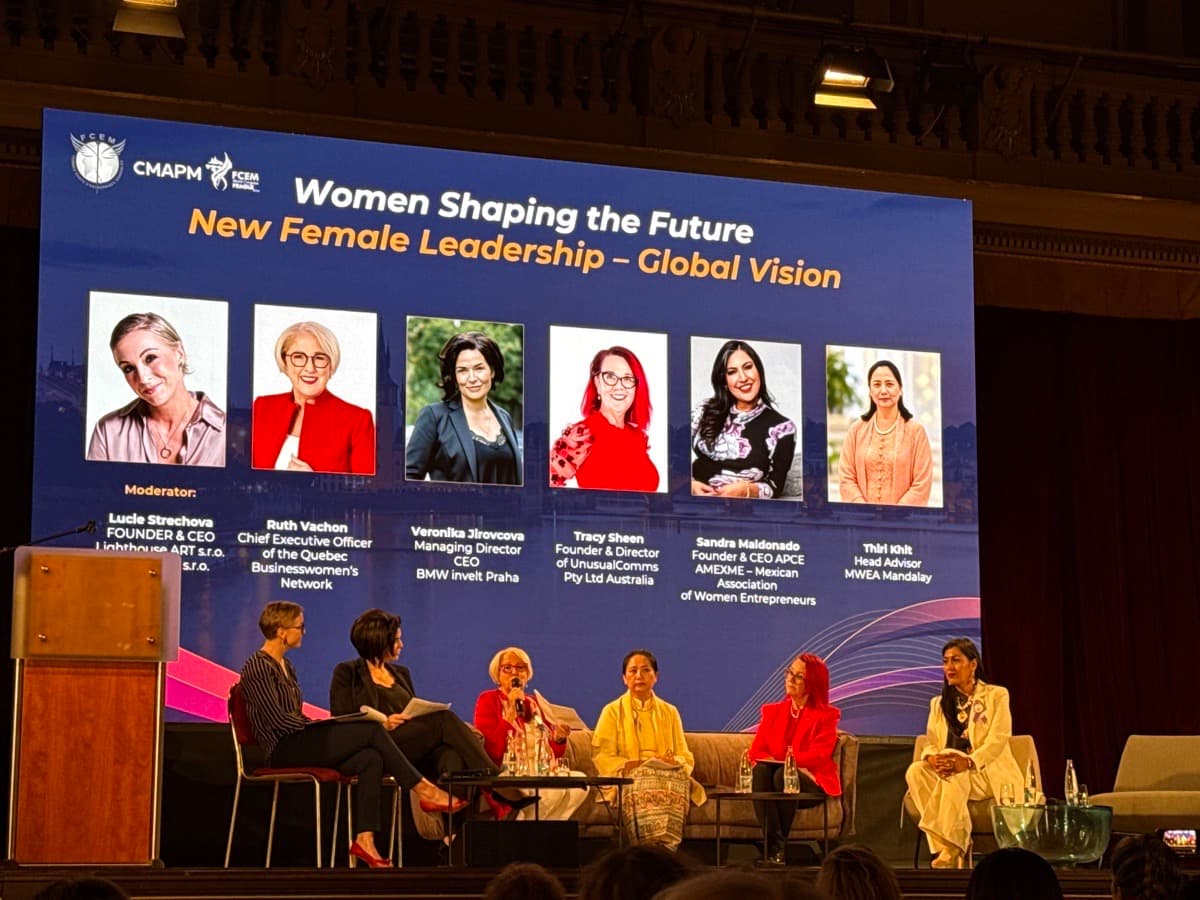
Our moderator, Lucie Strechová, introduced me with a confession. She was, in her words, “one of the people who are like really scared by the AI”.
She said it out loud, in front of a full hall. I loved her for it. I suspect plenty of people in that room were thinking the same.
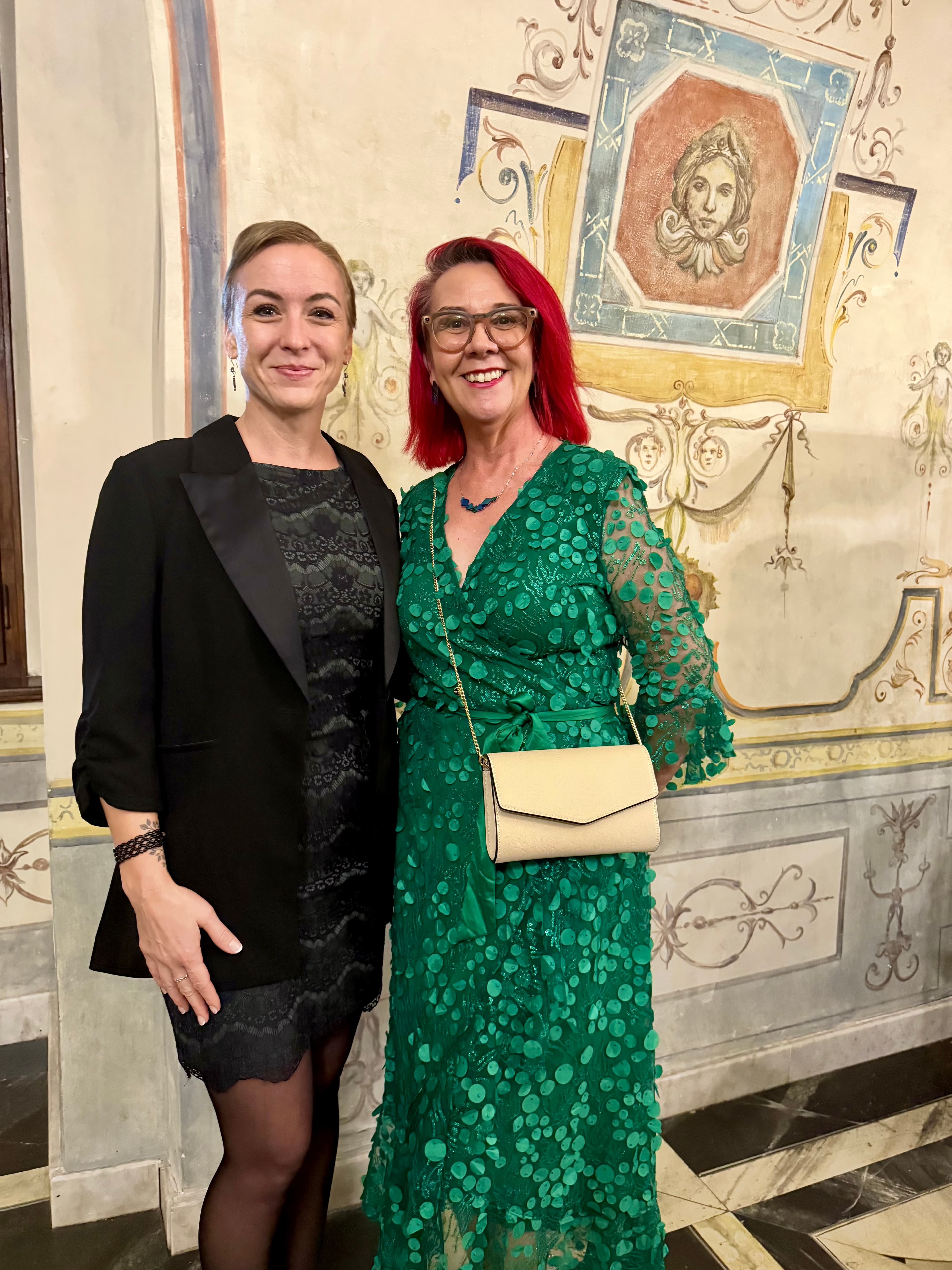
So I answered with the line I keep coming back to:
“Fear is a leadership gap. It’s not a technology gap.”
Fear is natural. It’s healthy. It just shouldn’t be the thing that decides how our future gets set. As I said on the day, “I’m not concerned about the technology. I’m concerned about the people that are running the technology.”
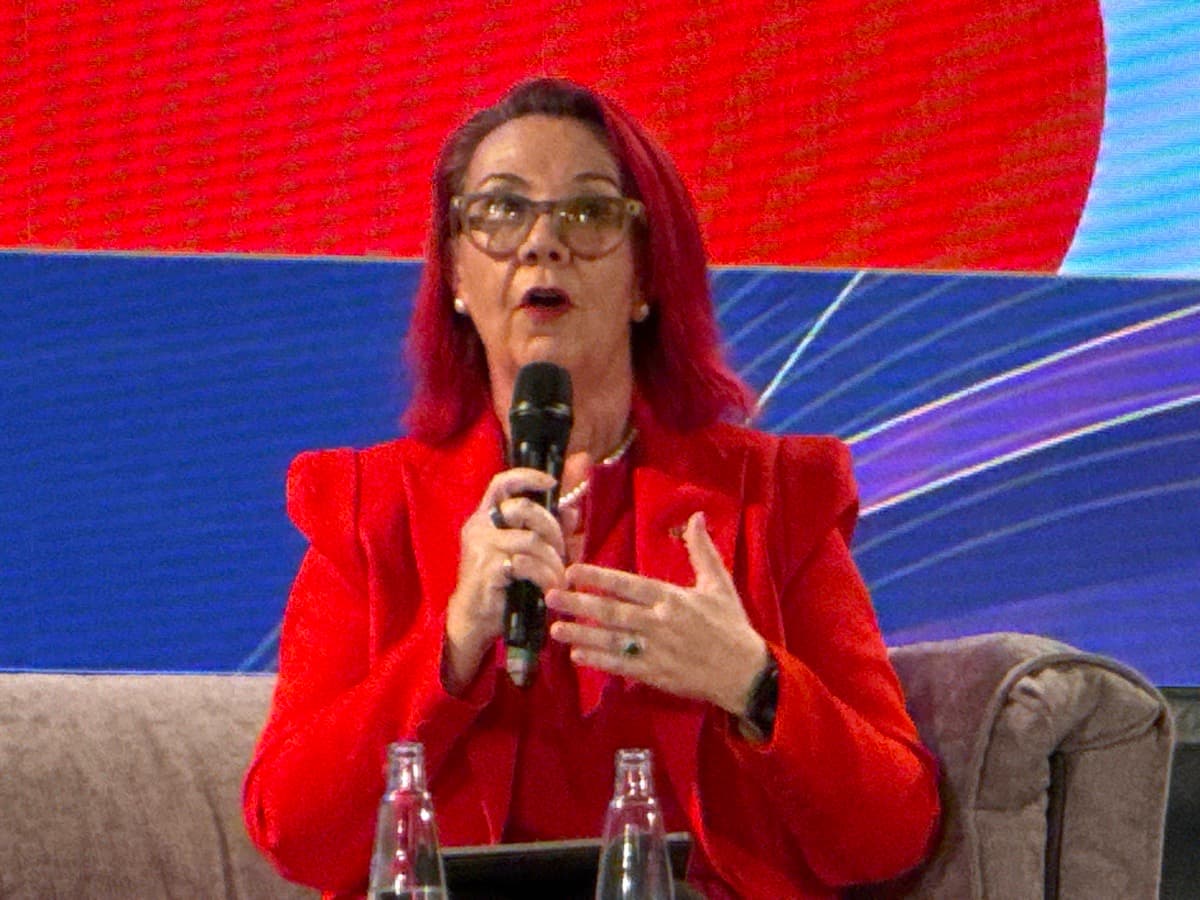
What Prague sounded like
I sat through the AI panel the day before as a listener. Liz Ward, WCEI National President, moderated it, and she opened with a show of hands. Who’s using AI? Who feels pressure to keep up? Liz said she’d have had her hand up twice.
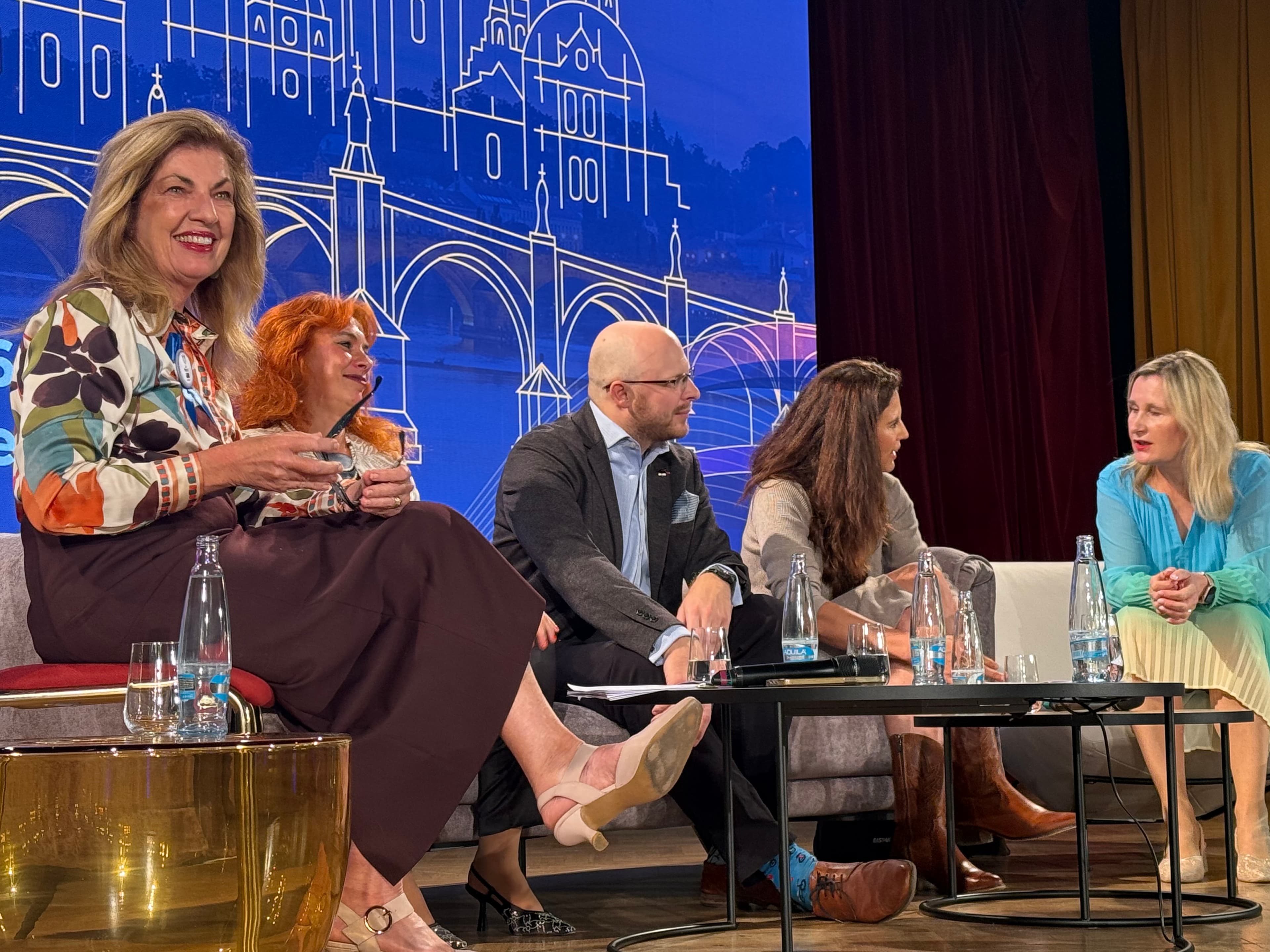
That pressure was the thread through the whole congress. Three voices from that panel stuck with me.
Martina Rašticová, Vice-Rector for Internationalisation at Mendel University in Brno, researches technostress. Her view: “the main problem… it is not the technology itself. It’s the way we introduce that.” And on the old assumption that older workers can’t cope: “Age is not the problem. It’s about the willingness to learn new things.”
Ondřej Dvouletý, Associate Professor in the Department of Entrepreneurship at Prague University of Economics and Business, told the story of a workplace that used AI to monitor how employees were feeling. People left. His line: “adoption is a decision. Business value is something we need to test.”
A board member of the Italian delegationsummed up the mood in one sentence: “we need to be careful. What does it mean? Not conservative, careful.” And: “the technology should be our helper. It should not be our leader.”
Careful, not conservative. I wrote that one down.
The numbers behind the nerves
Business is moving, fear or no fear. Across OECD countries, 8.7% of firms used AI in 2023. By 2025 it was 20.2%. More than double in two years (OECD, January 2026).
And when it’s introduced well, it works. Dvouletý quoted a 15% lift in customer service. The best-known study behind that kind of figure: when 5,172 customer support agents were given an AI assistant, they resolved 15% more issues per hour, and the newest staff gained the most (Brynjolfsson, Li and Raymond, Quarterly Journal of Economics, 2025).
Another study is worth reading properly, because it often gets quoted backwards. A Nature Human Behaviour review of 106 experiments found that, on average, a human working with AI did worse than the better of the two working alone (Vaccaro, Almaatouq and Malone, 2024). Pairs did better on creative work. They did worse on decisions.
Adding AI on its own does not lift results. Showing people how to use it does.
Where it goes wrong
I see the same mistake everywhere, from government to small business. I said it in Prague and I’ll say it here:
“Oh, we just turned Microsoft Copilot on to everyone. We just turned Google on, or we just turned ChatGPT on. Good luck.”
Then everyone wonders why the outputs are poor, or why people feel their role is about to be taken. It’s one more thing handed to them with no explanation of why.
The fear in that Prague hall and the fear in an Australian lunchroom are the same fear. It grows in the gap between “here’s the tool” and “here’s why, here’s how, here’s what stays yours”.
Closing the gap
This is what my GIST framework is for.
Guardrails first.“This is how I want to use AI. These are the ethics that we will use AI with. This is what we will allow to go into our AI. This is what we won’t allow.”
Intent before tools.Just because we can use AI doesn’t mean we should. Get super clear on why.
Strategy that keeps people in the work.Let AI take the repetitive load “so you can focus on the strategy and the relationships and the things that need to stay human.”
Practical Training. The most important piece, and the one I see missing in every organisation. In Australia we work on see one, teach one, do one. If you sit with me, bring your laptop. We’re going from A to B, and you’ll do it again tomorrow without me.
Why this one is personal
I told the room something I don’t always say on stage. In Australia I call myself neurospicy. I have ADHD, and I also have autism. School was hard. It was so regimented, and I did not fit in that box.
AI changed that for me. As I said on the panel, “it can exchange ideas with me in a way that makes sense for me.” For the first time in my life I can hold my own with board executives, or with my husband, an engineer who thinks in straight lines. If this, then that. Meanwhile I’m off looking at the swirls.
That’s the part of AI I wish more fearful people could see. It is, “for the first time, allowing us to all learn in a way that works for us.”
Same language, different accents
The thing I’ll remember most is how familiar it all sounded. Women from Monaco, Quebec, Mexico, Myanmar and Australia, asking the same questions about AI. Is it safe? Will my people be OK? Where do I start?
As I said on the panel, “we’re all talking the same language, but with different accents.”
From where I sat, Europe’s accent was caution. Careful, not conservative. Ours leans more to “give it a go”. Both work, as long as someone leads the people as well as the tech.
What to do on Monday morning
- Name the fear. Ask your team what worries them about AI. Write it down. Most of it is a training question in disguise.
- Write your guardrails on one page. What goes in, what never goes in, who checks the output.
- Pick one task and run it together. See one, teach one, do one. Measure the result before you roll anything wider.
Bring your team, and bring your laptops.
Practical AI training built on GIST: Guardrails, Intent, Strategy and Practical Training. See one, teach one, do one, in your room, with your tools, so the fear becomes a plan.
Work with me →Questions people ask
What is the FCEM World Congress?
The FCEM World Congress is the international gathering of FCEM (Femmes Chefs d’Entreprises Mondiales), the global network for women business owners, founded in France in 1945. The 73rd World Congress was held in Prague on 5 and 6 October 2026, bringing together women who own and run businesses from every continent. AI and how to lead people through it ran through its panels.
What award did Tracy Sheen receive in Prague?
Tracy Sheen received the Digital Entrepreneur Award from FCEM, the global network for women business owners, presented at the 73rd World FCEM Congress in Prague in October 2026. In the same year she also received the national Digital and Technology Innovator Award from WCEI (Women Chiefs of Enterprises International) in Australia.
Why are people afraid of AI at work?
Most fear of AI at work grows from how it is introduced. When a tool is switched on for everyone with no explanation, people get poor outputs and worry their role is about to be taken. That is a leadership gap rather than a technology gap. Explaining why, showing how and saying what stays theirs is what closes it.
Does working with AI always make people more productive?
No. A 2024 review of 106 experiments in Nature Human Behaviour found that, on average, a human working with AI did worse than the better of the two working alone. Pairs did better on creative tasks and worse on decisions. How people are trained to use AI makes the difference, so adding a tool on its own does not lift results.
Where should a small business start with AI?
Start with guardrails and one practical task, before any rollout. Write one page that says what goes into AI, what never goes in and who checks the output. Then pick one task and run it together as a team, measuring the result. Tracy Sheen’s GIST framework sets out the sequence: Guardrails, Intent, Strategy and Practical Training.
Ada, my AI assistant, worked through the session recordings and checked every statistic against its original source. The words and the opinions are mine. Human-led. AI-leveraged.
How I work with AI· Tracy Sheen CSP